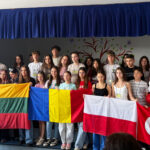
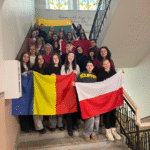
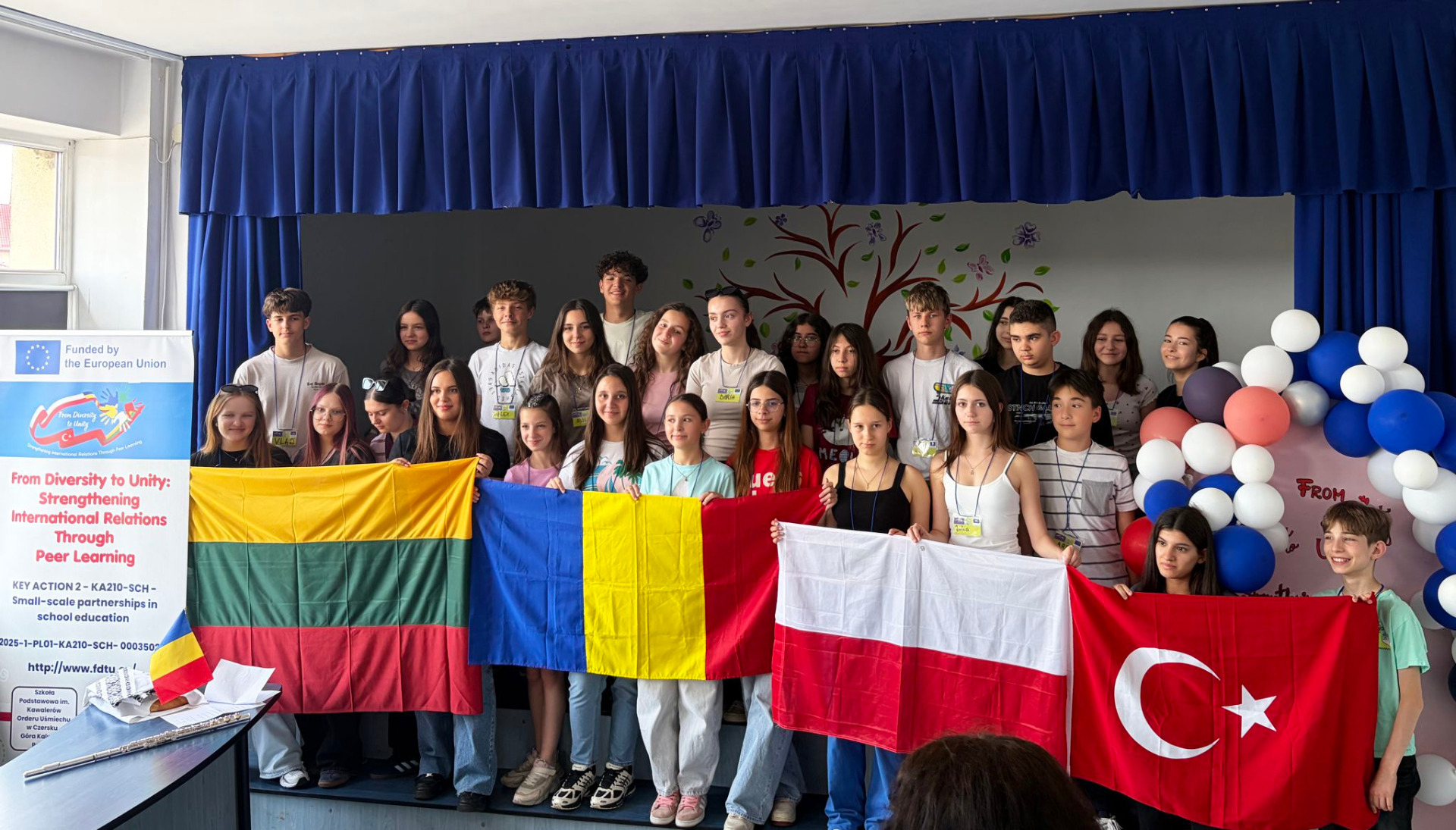

The Erasmus+ mobility hosted in Romania from May 25 to May 29, 2026, successfully brought together students and teachers from Poland, Lithuania, Turkey, and Romania under the lesson framework “Exploring Global Challenges – Environmental Awareness & Sustainable Development”. Hosted by Școala Gimnazială „Avram Iancu” in Câmpia Turzii, the week-long program focused tightly on analyzing urgent ecological issues such as pollution, deforestation, biodiversity loss, and climate change, while encouraging young participants to collaborate on youth-driven solutions like renewable energy and sustainable consumption.
The activity effectively combined field exploration, scientific learning, and rich cultural immersion. On the initial days, the international teams visited a local photovoltaic park to observe large-scale solar energy production, followed by a hike through the Turda Gorges (Cheile Turzii) natural reserve to study protected habitats and regional biodiversity directly in the field. The curriculum expanded to include a climate action workshop at the Local Natural Science Museum (“3 Lakes”) and an educational visit to the historical Salina Turda salt mine to examine the responsible repurposing of natural resources. To understand the broader relationship between urban development and environmental conservation, the participants also traveled to Transylvania, examining landscape management and sustainable tourism practices around Bran Castle and the city of Brașov.
Scientific and practical environmental research formed a primary focus on the fourth day during a visit to Cluj-Napoca. At the Alexandru Borza Botanical Garden and the University of Agricultural Sciences and Veterinary Medicine (USAMV), students engaged directly with practical ecology. They toured university greenhouses and university laboratories, learning from professors how water is scientifically tested and filtered, and how local environmental issues—such as the presence of invasive algae in the Someș river—are identified and mitigated.
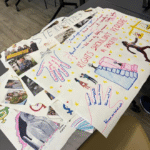
Every evening and field trip offered built-in spaces for cultural exchange, highlighted by practical community experiences like baking traditional Romanian papanași, and a vibrant final intercultural celebration where participants shared traditional dances, songs, and customs from their home countries. The mobility concluded with structured teacher and student presentations where international teams showcased their synthesized knowledge of environmental challenges, followed by the completion of a formal mobility evaluation survey to gauge the project’s impact and guide future cooperation.